Independent accessories and design journal
A closer look
at the details.
Thirty original articles exploring bags, jewellery, textiles, colour, design notebooks and careful documentation.
Start here · Forms and functions
Start with an object.
Notice its story.
Read a small object through both its practical role and its visual choices.
Read the guide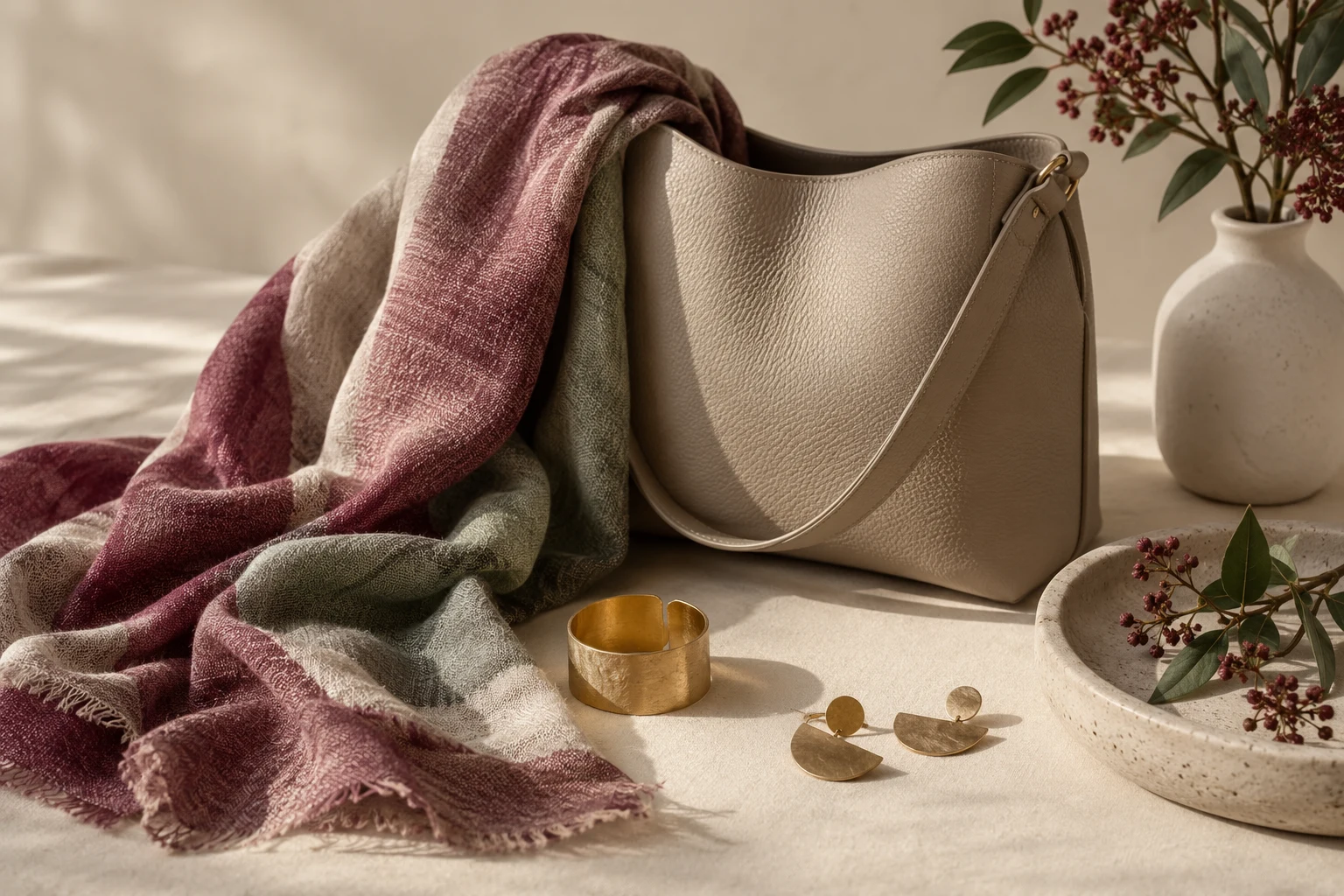
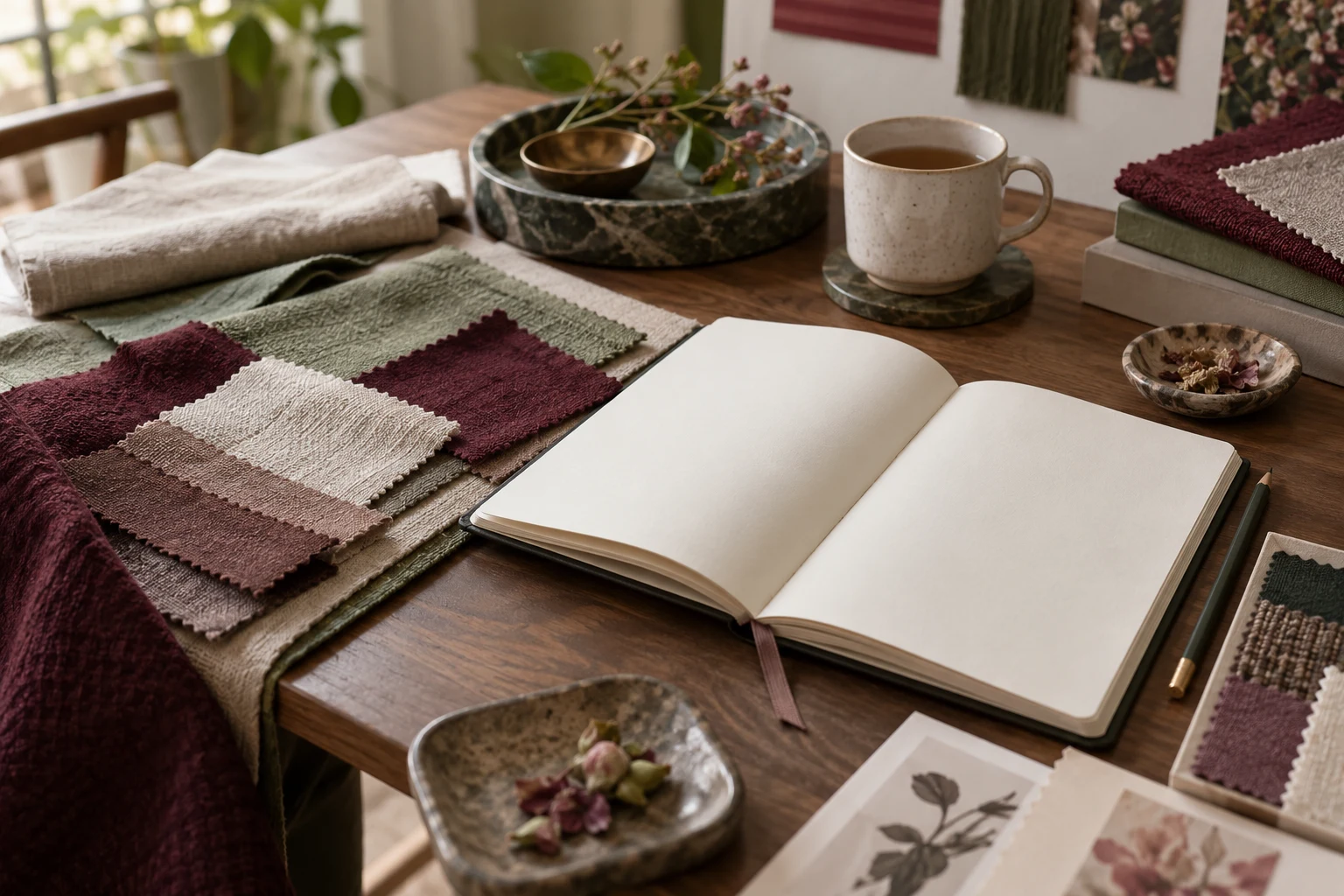
Colour and composition
Pouches, Purses and Travel Cases
Design notebooks
Drape and Flexibility as Observations
Forms and functions
5 articlesForms and functions
Accessories Combine Use and Expression
Read a small object through both its practical role and its visual choices.
Read the articleForms and functions
Read a Museum Object Record
Look for the evidence behind a label before adopting its wording.
Read the articleForms and functions
Bag Shape and Usable Capacity
Compare the outline with the space that the construction actually provides.
Read the articleForms and functions
From Bag Sketch to Sample Notes
Give a design idea questions that a sample can answer.
Read the articleForms and functions
Handles, Straps and Closures
Notice the small components that influence both outline and use.
Read the articleColour and composition
5 articlesColour and composition
Pouches, Purses and Travel Cases
Use the object’s declared context rather than its size alone.
Read the articleColour and composition
Geometric Jewellery as a Shape Study
Explore circles, lines and repeated forms without claiming a universal style rule.
Read the articleColour and composition
Appearance Is Not Material Identification
Treat a colour or surface impression as an observation.
Read the articleColour and composition
Scarf Patterns and Scale
Compare a motif close up and across the whole surface.
Read the articleColour and composition
Build a Small Colour Palette
Give each colour a role in one particular composition.
Read the articleTextile structure
5 articlesTextile structure
Smooth Surfaces and Visible Texture
Describe how a surface contributes to the composition.
Read the articleTextile structure
Choose a Focal Point as an Exercise
Try one clear point of attention and compare the result.
Read the articleTextile structure
Fibre, Yarn and Fabric Name Different Things
Keep the levels of a textile description separate.
Read the articleTextile structure
Woven and Knitted Structures in Context
Look at construction before drawing conclusions about use.
Read the articleTextile structure
Natural and Manufactured Fibres Need Specific Questions
Avoid reducing a material choice to one broad label.
Read the articleDesign notebooks
5 articlesDesign notebooks
Drape and Flexibility as Observations
Record how a sample behaves without turning it into a general specification.
Read the articleDesign notebooks
Print, Embroidery and Construction
Distinguish surface decoration from the textile beneath it.
Read the articleDesign notebooks
Start a Useful Swatch Library
Give every sample enough context to be found again.
Read the articleDesign notebooks
Keep Swatch Sources and Revisions
Preserve the reason a sample belongs to a project.
Read the articleDesign notebooks
Cultural References Need Context and Attribution
Study a documented example before borrowing a visual idea.
Read the articleMaterials in context
5 articlesMaterials in context
Leather Grain and Finish Are Separate Observations
Record what the surface shows and what the documentation declares.
Read the articleMaterials in context
Synthetic Materials: Do Not Guess from Appearance
A familiar surface can hide a different composition.
Read the articleMaterials in context
Mixed-Material Accessories Need Several Records
Describe each component instead of giving the whole object one material label.
Read the articleMaterials in context
Read the Care Instructions for the Actual Item
A similar-looking accessory may have different requirements.
Read the articleMaterials in context
There Is No Single Cleaning Method for Every Accessory
Start by identifying the object and the purpose of care.
Read the articleDocumentation and care
5 articlesDocumentation and care
Light and Colour in a Display Record
Document the setting as well as the appearance.
Read the articleDocumentation and care
Folds and Supports in Storage Notes
Describe how an item is stored before proposing a change.
Read the articleDocumentation and care
Loose Beads, Seams and Fastenings
Make a factual note before attempting a repair.
Read the articleDocumentation and care
Take Condition Photographs with a Record
Give images an identity, date and clear purpose.
Read the articleDocumentation and care
When a Historical Accessory Needs a Conservator
Keep learning and treatment decisions in their appropriate contexts.
Read the articleA considered approach.
Independent educational journal. Original design exercises and museum reading; no affiliation with the former trade show or its organisers.